Episode Transcript
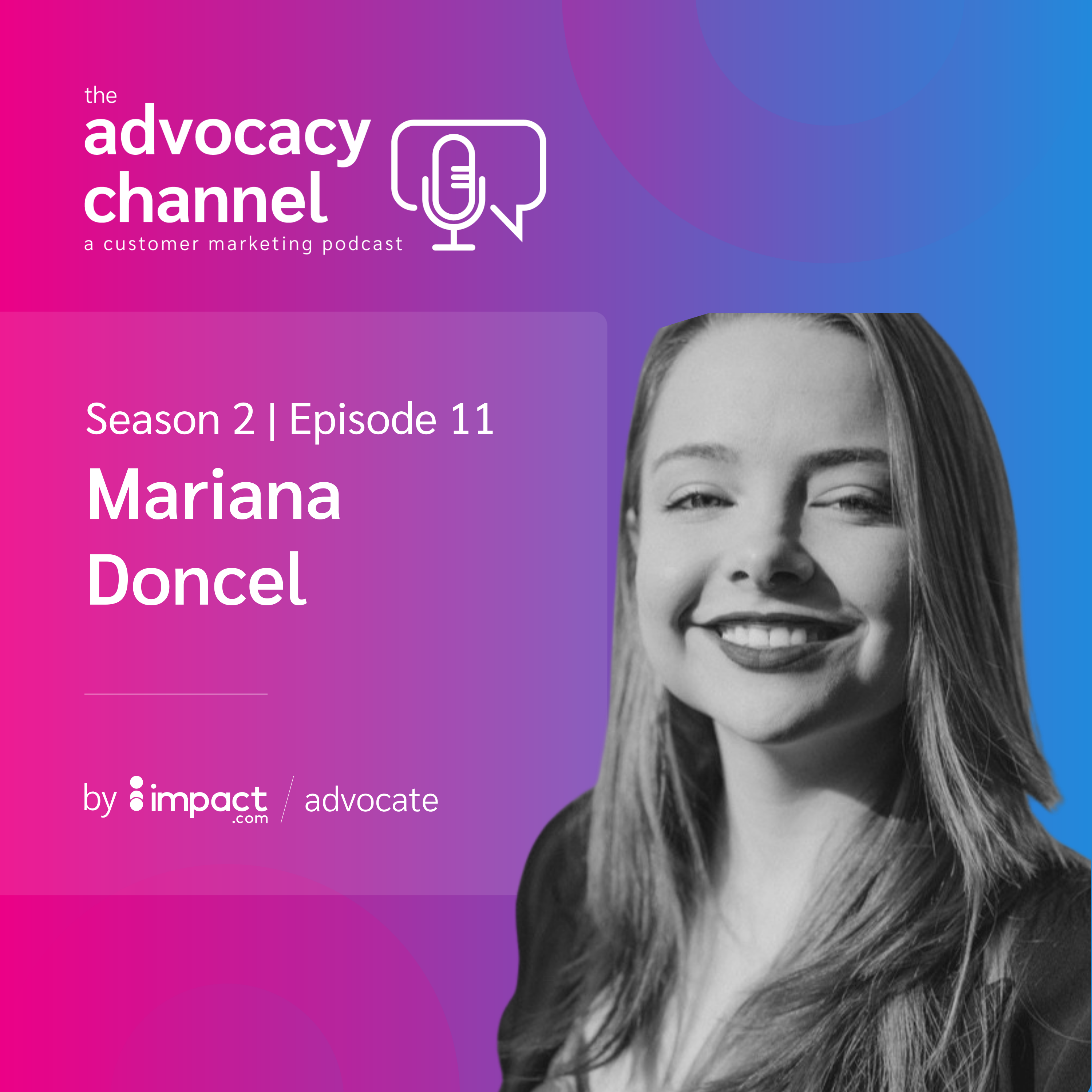
[00:00:03] Speaker A: Hello and welcome to the Advocacy Channel, a customer marketing podcast brought to you by impact.com in this episode, our host Will Fraser speaks with Mariana Donsel, product marketing lead at hackthebox, the leading gamified cybersecurity upskilling, certification and talent assessment platform with a global community of over 2 million members.
With experience building referral programs across international markets, Mariana shares valuable insight on turning passionate users into powerful advocates. In this episode, you'll learn how to design referral programs as standalone products, practical approaches to fraud prevention in a community of hackers, and strategies for leveraging global audiences to drive advocacy and growth.
Enjoy.
[00:00:53] Speaker B: Mariana, it is such a pleasure to have you on the show today. I'm really looking forward to our conversation. Just thank you so much for joining us.
[00:01:01] Speaker A: Oh, thank you for having me. I'm very excited. This is my favorite podcast. I'm definitely very excited. Don't worry.
[00:01:08] Speaker B: Well, we're honored then. And I'm sure it'll be a very, a very good show here. I know our pre conversation was really exciting and I'm excited to get into that for our listeners. But before we get there, you know, I'm always interested in kind of people's story. You know, how did you get into product marketing and kind of, how have you gotten to where you are today? So maybe you can just share a little, little background about yourself for, for the listeners.
[00:01:30] Speaker A: Sure, sure, I'm going to go for it. If I'm being, like, too lengthy, please let me know because it's something I'm passionate about, so, you know, I can go on a bit.
But yeah, I mean, talking about my path in product marketing is, is a bit crazy for me because it feels like it has been forever, but it still has been around seven years now. But I feel like I've never, you know, wished to do anything different and it's something that really excites me. Right. So I started actually before, like, going deep into product marketing, I started as a sales representative. And I remember that I had like a very difficult time trying to close my deals.
And I realized that, you know, the general messaging or the general sales pitch was not working for my markets. And I had to, you know, start diving into market research and understanding market segments and crafting different usps for those segments and proof points and kind of all that. Just, you know, I enjoyed it so much. It worked so well and it just made sense for me that, you know, product marketing is what I would like to do.
So. Yeah. So after that, I managed to grow into the organization. I was Working with both in marketing and sales roles and still like B2B oriented. And then at some point I decided also to, you know, move abroad. I think everyone has a point in their life, right? Oh, I wish I move abroad.
So I also had that moment in my life and I moved to Estonia to work in an edtech company called Mindvalley. And that's when I started having also my first taste of working with marketing for consumers. And I think that that's when things clicked in. Right. When you have the scale, when you have the numbers, when you can test things.
And I really enjoyed it. And it's also what I do now, for example, Hack the Box, just, you know, keep building on that skill set. Keep, keep understanding, you know, what's, what's driving the market and going to referral schemes. The reason why we're here. Right. It was just a very natural path into, into exploring this very, very important and impactful sales channel.
Wonderful.
[00:03:43] Speaker B: I mean, sounds like a, both a kind of a, a windy road and, and a straight road. Once you found it. It sounds like you're really in a place that you're loving.
You know, you, you mentioned Hack the Box and we're going to talk about some of the stuff going on there today. But maybe just first you can kind of give the audience a little understanding of what Hack the Box is.
[00:04:04] Speaker A: Oh yes. I had to figure out also a way to explain to my mom, which was hard. Right. Because it's a cybersecurity company. But yeah. So Hack the Box is a cyber security online training platform in which basically people cannot only learn about the theory and the skill set. They need to work in cybersecurity, but also practice. So we offer hands on challenges. The ability of people to actually break into real machines and be ethical hackers for a bit of, without breaking any law. Right. And I think that, you know, it's very technical and it's a very big industry, but idiscovery is also very fun and that has been also one of my biggest realizations that, you know, cybersecurity can be very fun and Hacked Box is definitely a company that is bringing that in the front of the industry.
[00:04:53] Speaker B: I'm always interested, you know, I mean, it's always funny, right? We've got to figure out how to explain what we do to our parents and to our friends. And it's always kind of a fun challenge because that's like we go to work all day in these organizations and somehow explaining them is this is not second nature to us.
I think that you know, as a, as a young nerd myself, at one point, I loved playing with cybersecurity, and I found it kind of like, inherently fun. Where do you find kind of the most fun in it? Is it the challenges? Is it the culture? Like, I'm just kind of curious, like, where's the excitement for you in there?
[00:05:25] Speaker A: Yeah, I mean, I think the interesting. I mean, I didn't know anything about cybersecurity before going to Hack the Box. Like, I just jumped right in, right. And try. I had to ask, like, technical people around the office, like, what does this mean? What does that mean?
So it's definitely a new fit for me. But I realized that people can be very passionate about it and, and they're also very competitive. Like, they compete with each other, like, you know, who. Who knows best or, you know, who is more on top of the latest vulnerabilities. And, and it's a very, very technical field. So you really need to know a lot about everything. So it's just, it's just very interesting how something that is so technical and it may sound so boring for, like, majority of people tied to industry have so many passionate people working in that. And, and it's also something that, you know, directly touches our lives. I mean, cybersecurity is part of our everyday lives. Like, we are being bombarded by scam messages. Like my phone, like, I receive scammers at least every month or someone calling me. And I just, it's. It's a very relevant field, a very growing field, and it's just very interesting to see like this big community of people just being really passionate about it.
[00:06:38] Speaker B: Well, I think that probably ties kind of into, like you're saying, kind of some of the meat of our conversation here today. You know, at Hack the Box, you are, you're running the, the referral program. And I'd love it if you could kind of just share with the audience what are you doing there and kind of what were your main goals with that program?
[00:06:54] Speaker A: Sure. I mean, so just for context, I lead the B2C product marketing side of things on Hack the Box. Right. And therefore, you know, my main, the main question that I have every day is like, how. How can I grow our community? How can I make sure that our products are everywhere? How can people get to know our product? And as I mentioned before, right, Like, I didn't know that people in cybersecurity was so passionate about what they do and that they would, like, have this very tight community. And they were like, they can discuss cybersecurity at length for days and they join competitions like that, less days and they burn asleep. And I think that understanding, you know, how much people like and enjoy a specific product like what we offer Hack the Box, it was just natural to think of, okay, how we can make these people also the voice of the company. How can we kind of also recruit these people to, to, to sell Hack the Box, to, to spread the Hack the Box word around the globe. So that's where the referral program comes in, in which we try to enable people to share, you know, that they have joined Hackbox to share with their friends, to incentivize their friends to join. And that has been like a no brainer for us and has worked very well.
[00:08:12] Speaker B: What is the, what's the actual structure of the, the program that you have in place today?
[00:08:17] Speaker A: Sorry, I didn't go into the, into the details of it, but I think it's, it's quite simple. We have a Hack the Box Academy platform and there you have cubes, which is our learning currency. So we have certain cubes can unlock modules and courses and cybersecurity topics. Right. So what we do is that if you refer your friend, we give you access to a certain amount of cubes and this better for both you and the people that you refer can have access to more learning material.
So as I mentioned, like people are very passionate and they really enjoy having the access to the, to this or for certain content for free. So they're very open to sharing and inviting their friends.
[00:08:53] Speaker B: And you know, when we were talking before, you kind of talked about this idea that like the way you might look at a customer based upon their geography, it might be a little, a little different when you, when you put it through the lens of a referral program. Maybe you can kind of touch a little, little bit on how you, you see that international flavor touch in your program.
[00:09:11] Speaker A: Sure. I mean I think I had definitely a very big taste of that when I was working in Mindvalley, the company I mentioned before, in which was leading kind of the international marketing team. And we had different markets and different channels for each market.
And I could see in action how cultural nuances, how consumers behave, far less different markets. Right. We had, runs a couple of referral programs back then. And there is just so many things that can be different across markets. Like the rewards you give. Maybe for some countries, you know, an Amazon gift card will not do because maybe they don't even have Amazon or the types of things they value as rewards might differ or even like the way they share your platform with friends, they might use different social networks or they might have different ways of sharing one to one, one to many, the timeline. So for example, we did some referral programs for events. Kind of like to have more people joining certain events. And when we're working on a timeline, you need to consider, okay, is there any major holiday, is there any major cultural event happening on that day that I need to factor in?
So I think it can touch every aspect of your referral program.
It's just a matter of choosing what makes sense to adapt and what maybe is maybe too costly and we just need to roll with it.
[00:10:36] Speaker B: Yeah, I think those all make a lot of sense. I think you mentioned a point earlier in our pre call where you were talking about this idea of people maybe a lower revenue impact or a lower cost market also being, you know, maybe valuable through the referral program. I'm curious if you can kind of elaborate on helping us understand kind of, you know, people from the markets who may not be able to afford your product, but being able to be really strong advocates for your product.
[00:11:01] Speaker A: Yeah, I think that ties in a lot with like how, how you think of your referral program as a product. Right. Your referral program in the end is a product that people buy. Maybe they just buy with their time instead of their money, or they buy with the exposition instead of their money.
But the benefits of your referral program needs to align with the needs and what your customers are looking for. And that may differ from your actual product. Right. So what we see for example in Hack the Box is that our biggest, let's say influencers or the people that are more interested in using a rewards program maybe are people that will not have the ability to spend as much as they wish on the platform.
So they use a referral program to be able to get access to certain things. And it's a win, win situation. Right. Maybe have someone that, you know, maybe has a more devalued currency and therefore cannot access certain products or cannot access, you know, certain content and you give them opportunity to do that. But while as well, you know, making, strengthening your brand, bringing more people in. And, and that's, that's the interesting part. It's also about democratizing access to a project.
[00:12:11] Speaker B: I love the way you think about that. I think that it's so cool to think of this like, you know, you say, you know, it's a product, but you know, you can buy with your time or your money and, and just appreciating the value of that Time. Right. You know, when. When someone wants to have bad enough, the window put their time in and help you spread the word. I mean, A, that's a testament to your core product, but B, that's just like a really exciting way to think about this program and this as a product and not just kind of a fire and forget marketing campaign. So I just really like the way you put that. It's a product you buy, you know, you buy your time or your money. And I like that a lot. When you are designing these programs and we are looking at different global experiences, I think there's kind of like this idea of a standard experience that's easy to communicate and then also a localized experience that there may be different incentives and messaging. Do you have any kind of standards or philosophies around the way that you want to balance a global approach to a program like this?
[00:13:09] Speaker A: I mean, I'm gonna go really like university professor here and say it depends. But I mean, I think it's a business decision, as many other things are business decisions. And you need to factor in the cost, you need to factor in the return on investment, the complexity that you're going to create on your program. I think maybe what I've seen sometimes is like some rewards programs that, you know, in order to fill everything they want to do, they make the program too complex. And that's also shooting yourself in the foot, right? Because if it's too complex, people don't understand. If people don't understand, they don't take action. So there's a lot of things to factor in.
I'd say that when it comes to localizing and putting efforts like for example, in language localization, or worse localization.
And I think it's just very important to understand the trade off of investing on that, because that requires investment, that requires time, that requires also money from your company to be able to supply that for your customers. And maybe it's just resources that could be better allocated, giving more benefits to your users. Unless you think. I think a rule of thumb. Is this a specific localization or the specific personalization, a core part of the way my users perceive the benefit of my product or of my referral program if it's not a core part, if it doesn't change your experience so much, maybe those resources would be better allocated by providing ninjas more value.
[00:14:45] Speaker B: I like that. Yeah, no, I appreciate the. It depends on it, but I still like the way you're doing. You're thinking about that, right? Like, is. Is that localization, that modified incentive Is it actually approaching the core value? And I think that's like a really important way to look at it. And I think we've all seen programs where maybe the lawyers have gotten their hands on it and it's become too complex and too many rules and people just aren't willing to participate.
So I think that's all a really good point. Take. You know, I think one of the really interesting things specifically for hack the Box is how do you think about know, fraud and how do you think about potential program abuse? Because you, you literally have a user base that are hackers. You know, they are interested in figuring out how to hack the system, how to hack the box, if you will. But they're, they're interested in figuring out how to kind of play with the tools you put out there. So I'm curious how you think about fraud in the context of a referral program.
[00:15:37] Speaker A: Sure. I mean, I can tell you that I don't think only on the context of referral program everything. Like the marketing team is always thinking about how people are going to hack the system with anything we put out. Right.
They discover things that are not launched yet. Sometimes, you know, you really need to be like, thinking about how you're going to spread information, how are you going to share things? So it's definitely a tricky thing and an affer program is definitely trickier. Right. And I think there's two ways of thinking about that. One, you know, is going on the road of like, how can I prevent all the possible issues that might arise? So, you know, I map all the holes and I try to make sure everything is kind of closed. No one can get it.
However, as we mentioned before, that might be a very difficult path to go because that might make your program become very complex and not understandable for your users or, you know, you need to have like so many rounds of legal reviews and you need to have engineering work. And that might not be the most efficient way of approaching it.
The way that, you know, I think on HackVox decided to approach that is to think, okay, let's admit that there might be people that might be able to hack the system, not hack, hack the box, but just understand how they can profit from the reward system. Right. And just accept the fact that someone is going to try to do it. So how I can mitigate the damage. So, okay, someone is going to have the time and the effort to go through and, you know, make all of this, you know, complex things in order just to get more rewards. How we can set a limit reward per person. So we know that if that happens, you know, it's not to infinitely. It's, it's gonna end. It's, it's a, it's a minimal lot that we might have.
And for example, also how we can minimize the incentives because guess what, people that, you know, if you don't have a big incentive for people to do that, and it's a complex thing for them to do it, you're much, much less likely to get your program, kind of.
So what we do here is like, we try to tie every reward with monetary actions. So making sure that, okay, you're only going to get this benefit if someone else's, that you referred all the product this way, it's much harder for them to actually, you know, hack the system because they know that you need to spend money to get something back. So as I said, like, I think it's, it's a balance between complexity and moving fast and accepting that things may happen, but also thinking about how to mitigate if, in case that happens.
Was it clear? Do you have any questions? No.
[00:18:12] Speaker B: No. I mean, I think that's a really, really well, really well put. I think, you know, looking at the incentives as a form of like fraud deterrence, I think is always such a smart way to think about it. But I like the perspective you take, which is to accept that like, there probably will be someone playing with the system. There might be some quote, unquote abuse, but as long as the program is at its core aligned with your business goal, you can kind of accept that, that reality. And I like that you're more being pragmatic in your approach. I think some people want to be absolute. They want to believe that it's 100% protected. And I think as long as it's, it's working for the business, the odd person that, that maybe wants to play with it is, is all right, because there's still, there's still economic return coming from the program.
[00:18:57] Speaker A: Yeah, it's a risk analysis. Right. You need to understand how much risk you're willing to take based on how much benefit you're bringing to the company.
Yeah.
[00:19:05] Speaker B: Now, I think one of the things that's really interesting to me with a referral program of any type is, you know, the more we ask, the better they do. You know, it's a product, it's a feature, it's valuable in its own right. You know, we can talk about fraud, which might be kind of thinking about the undesirable members per se, but when it comes to identifying your Most desirable, the people who you really want to ask. Have you found any tricks to figure out kind of who's the best people to ask to get a referral?
[00:19:33] Speaker A: I mean I think that goes back to what I mentioned before. Like to you know, who gets more benefit out of your referral program. Of course you need to first, you know, understand how to draft your referral program according to your user base and understand who is more likely to refer to which you know, your happy customers are definitely more likely to refer it. So if you don't understand your isv, you don't understand the people that are happy with your brother.
It's hard to refer program. It's going to work. But, but as I mentioned, right. Maybe you know, the people that spend most money on your product are not necessarily people that are going to refer you the most.
So I think you need to understand how the referring program as a product plays into your referring audience.
[00:20:18] Speaker B: I think that that makes sense because I think, you know, that that is a challenge. We see sometimes we see people who want to invite everyone to the program or maybe sometimes they want to invite this one, this one hurts my soul a little bit. Sometimes they want to invite their like least valuable customers because they're afraid of maybe offering something to the most valuable customers. So yeah, I think it is that balancing act. You say like you know, finding that happy customer but then identifying who in there will actually make the referral.
[00:20:44] Speaker A: Yeah, yeah. It's hard to find the right combination of things. So I'll say it's important to test.
[00:20:52] Speaker B: Yeah. And maybe talk about that.
How do you think about testing and trying out new ideas with your referral program?
[00:21:00] Speaker A: I mean we have been doing some new expansion and trying out different things.
I think there's definitely a lot of good things we realized. Like for example, we just added the double sided incentive into a referral program and it has showing some, some positive results. But we also have, you know, some failures that are, are, are important as well. So I think that as I said, like you also need some time to understand how like I think that referral programs depending on kind of like your, your customer cycles might take more time for you to figure out how they are working with because you also need to give time for customers to refer and to spread a word. So it's different than doing like an A B test on an ad in which one day you can go and see, yes, this works more than this.
And for example, maybe you can also test things. But if you don't educate your customers enough about the new things that you're adding, it's not going to make a difference. So it's not just about like adding more features or driving more benefits, like how, how you're going to bring awareness to that. How are people going to be enabled on this new thing that you're bringing? So there's, there's a lot of factors to take into consideration.
[00:22:13] Speaker B: Yeah. And I think that that one you made up at the beginning there about, you know, it takes time to test the referral programs. I think, I don't know if you've ever seen it, but I've seen it where people, you know, they want to run a program for one month to determine if it's going to work. And, you know, my experience says, like, one month is just not, it's not even enough for your very first round of testing, let alone to get a few iterative tests and to learn.
So I think it's a very, very salient, salient point.
[00:22:37] Speaker A: I was just going to mention that, like, you know, any channel, like, you cannot stick it for a month only, like, even if you're running an ad campaign, which theoretically you can have, you know, immediate results if you just open your Facebook ad manager, you need to budget for the test.
Like, I think that that's very important that you have a set budget that is not roi, it's testing budget. And I think many times when companies think about, you know, I'm going to add different growth channels or I'm going to explore different channels of opposition, they think, okay, this is how much I'm going to spend. But that's much the ROI I'm going to get. And they forget to separate an amount of that budget to see, okay, I want to make sure that for six months, I do, I don't know, three or four iterations of this just to see what can come out of it. So I think that that's very important to have that specific portion allocated to testing.
[00:23:30] Speaker B: No, I, I, I can't agree more.
Now, you've, you've run tests, you've run multiple programs, you've been involved with referral programs, as in a product marketing capacity for, for a while.
If someone is listening to this and they're like, I'm just about, they're just about to launch their first customer referral program, which is a lot of people who are being tasked with launching referral programs. What's kind of your key advice? What's the, the one or two things that you think they just need to take to heart to succeed?
[00:24:02] Speaker A: I Mean, I think like I'm going to sound a bit like a broken record, but I think it's, it's very important. Okay. Is to think for a program as a product like it's not just because they're going to give incentives to people that they're going to take action on it. So you know, if these incentives are not aligned with their current needs or if they don't outweigh the cost, that investment they do on their time and you know, maybe exposing themselves on social media, they're not going to do it. And just also as a good product may fail because it has terrible distribution. Also a great referral program might fail because you don't have a good distribution and a good marketing of your program. So you need to make sure that you bring awareness that you know, you have automations running that educate your customers and that you really spread the word. If you just put it in, expect it to go viral. It's very unlikely that it's, it's going to be effective.
[00:24:59] Speaker B: I just can't agree more. I think that is such the advice that I, that I hope everyone hears from this episode today because that is absolutely what we have seen be effective too. So I am very excited that we agree on that one. Before we break here, any last points, any last little tidbits you want to add into the conversation here today?
[00:25:21] Speaker A: I mean I think we touched on everything, all the topics I'm passionate about, you know, like growth channels and how to, you know, make business decisions. On this I think that I just, you know, take my advice, a grain of salt on the sense that like I am a product marketer and I think like my head works as a product marketer. So that's why I'm always talking about benefits and you know, like how you position and how you distribute. So I just think sometimes I feel like I sound like a broken record, but. Yeah, but I hope that my expertise has been useful to the people listening.
[00:25:57] Speaker B: I mean, I think it's been very valuable and I've always lived by saying of.
By the time you're tired of saying it, people just started hearing it and I don't think you sound like a broken record at all. So thank you very, very much. If anyone listening today wants to hear more of your thoughts or connect with you, what would be the best ways for them to do that?
[00:26:16] Speaker A: Yeah, I mean I think like everyone you can find me on LinkedIn. Surprisingly I have a very, not very common name like Mariana Donel. Like that's my slash. Mariana Donel. So you're probably just going to find me very easily. And if you're free to, to connect, send a message, I love to discuss those things. I can go length. So yeah, those would be a message if you're not in for like a long talk.
But if you're in.
[00:26:40] Speaker B: Yeah, I feel like that's a very exciting offer. You know, often people have are thinking like, I just got to get in one question, get my value and get out. But you know, I love that, you know, if you're not in for a long talk, that's wonderful. Well, thank you so much for your time here today. This has been an amazing episode. I've learned a lot and I just like love to see the knowledge coming from what you're practicing. So thank you so much for sharing that with me and with our audience today.
[00:27:04] Speaker A: Yeah, thank you so much, Will. And if you know, there's any other way I can help or support, just reach me.
[00:27:10] Speaker B: Wonderful. Thank you very much.
[00:27:15] Speaker A: Thank you for tuning in to another great episode of the Advocacy Channel brought to you by impact.com join us next time as we bring on more expert guests like Mariana. If you enjoyed the episode, please review rate and subscribe wherever you listen to podcasts. Want more partnership marketing Insights? Check out impact.com mom's other podcasts, the Partnership Economy and the Publisher's Playbook. The links are in the show notes. That wraps up another great episode of the Advocacy Channel. We'll see you real soon.